“Contemporary” may be one of the least useful words in a property search. So may “traditional”.
A buyer asks for a contemporary villa, but what they may actually be asking for is natural light, fewer corridors, an open kitchen, large doors onto a terrace and a home that needs no work.
Another asks for traditional Algarve character, but what matters to them may be quite different: mature gardens, privacy, natural materials, warmer interiors and the sense that a house belongs to its surroundings.
Those distinctions matter. Because once you separate the style of a property from the qualities you are hoping that style will provide, the search can change considerably.
A renovated villa from the 1990s may deliver almost everything a buyer thought required a new build. A recently completed contemporary home may have more warmth and permanence than expected. An older property may have exceptional proportions and mature privacy, but also a layout that no longer works particularly well.
None of those things can be understood from the word “traditional”, “contemporary” or even “renovated”. And in an Algarve market where all three can sit within the same search area, sometimes within the same resort, relying too heavily on those labels can mean overlooking the better house.
So should you buy a traditional villa, a renovated property or a contemporary home in the Algarve? Before answering that, it is worth working out what you are actually asking for.
What Do Buyers Really Mean When They Ask for Contemporary?
Contemporary is often used as shorthand for an entire way of living. Usually, the request goes well beyond minimalist interiors or a recently completed property. It may mean larger windows, more natural light, an open kitchen and living space, fewer corridors, better integration with terraces and gardens, discreet technology and rooms that make sense for the way people live today.
A purpose-built contemporary home can deliver these qualities particularly well because they have been considered from the first drawing.
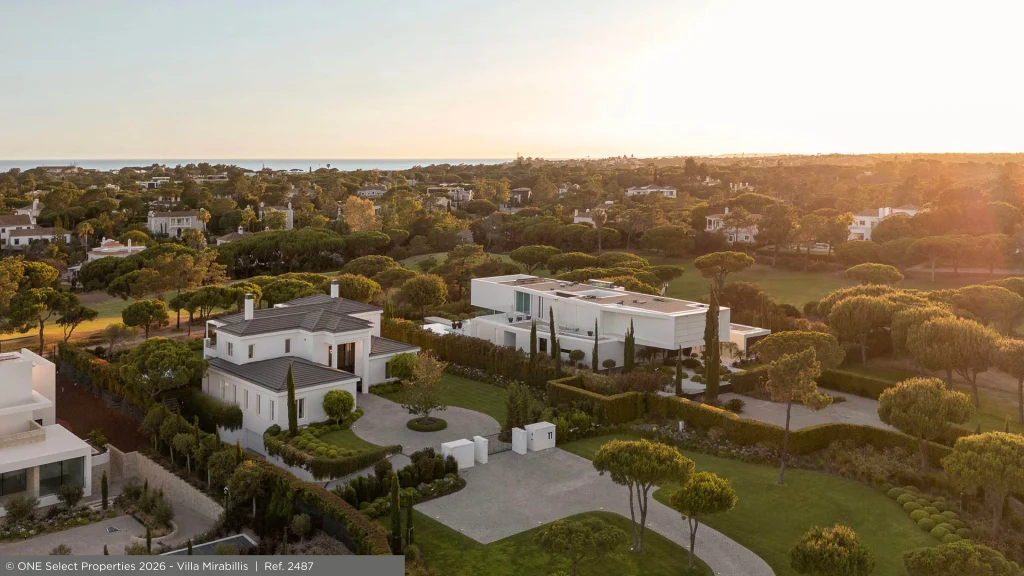
Villa Mirabillis in Quinta do Lago is a clear example. Designed by Jaime Coutinho and completed in 2023, its generous glazing, open living areas, integrated technology and relationship with its golf setting are not later additions to an older plan. They are part of the architecture itself.
So what are the advantages of buying a contemporary villa in the Algarve? At its best, contemporary architecture can make everyday life simpler. Circulation is considered from the outset, indoor and outdoor areas relate naturally to one another, modern systems can be integrated discreetly and spaces can be designed around current expectations of how a home is actually used.
But there is an important distinction between a house that is contemporary and one that is simply new. New finishes date. Technology moves on. Kitchens are eventually replaced. What lasts is whether the architecture works.
A dramatic wall of glass may create the first impression, but the more important question is whether the room receives the right light throughout the day. An enormous open-plan space may photograph beautifully, but does it still feel comfortable when only two people are at home? Does it work when twelve arrive for dinner?
The best contemporary houses are often the ones where, after a while, you stop noticing how clever the architecture is. You simply notice that living there feels easy.
Can an Older Algarve Villa Feel More Current Than a New One?
Absolutely. Age and relevance are not the same thing. A well-considered older home can feel remarkably current when its original strengths have been understood rather than erased.
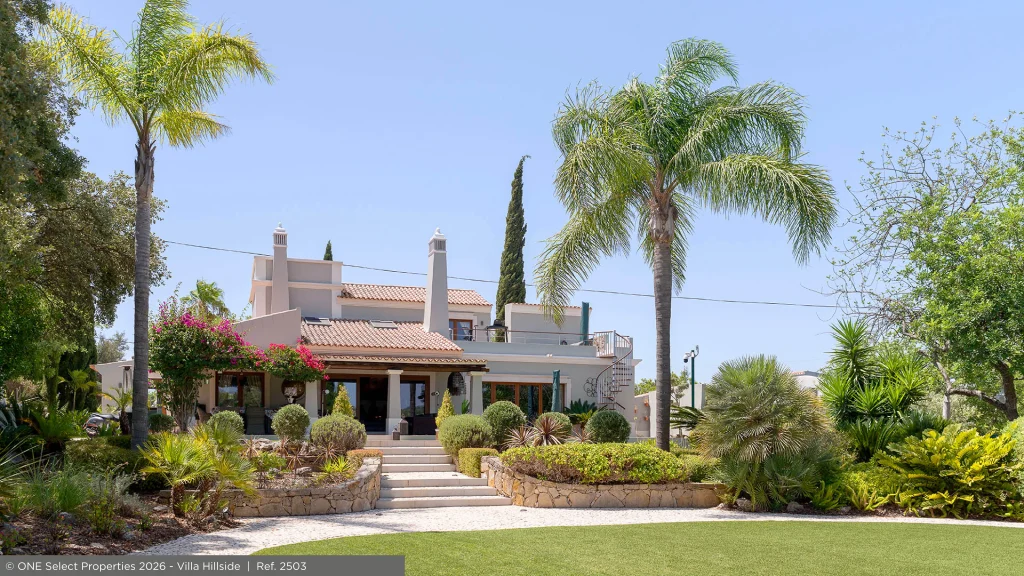
Villa Hillside in Santa Bárbara de Nexe makes that case particularly well. High timber ceilings, fireplaces, natural stone, terracotta and established gardens give the property a sense of identity, while its renovation has introduced the comfort and practicality expected from a modern Algarve home.
The result is not an old house pretending to be new. Nor is it a contemporary interior placed inside a traditional shell with little connection between the two. The appeal lies in the conversation between them.
That distinction matters when asking what should I look for when buying a renovated villa in the Algarve. A good renovation should solve the things that no longer work without automatically removing the things that do.
Poor circulation can be improved. Building systems can be updated. Bathrooms and kitchens can evolve. Thermal comfort can be addressed. But other qualities deserve more caution.
A high timber ceiling cannot be recreated quite as convincingly once it has been removed. Mature landscaping cannot be installed overnight. Natural materials that have acquired character over time are different from surfaces selected to imitate age.
Renovation becomes more interesting when the starting question is not simply how can we modernise this? It is what is already here that we would be foolish to lose?
Character and Inconvenience Are Not the Same Thing
There is, however, no reason to romanticise an older property simply because it is older. A dark corridor is not automatically charming. An impractical kitchen does not become desirable because it is original. Poor glazing, awkward room relationships or outdoor spaces that no longer suit the way a house is used should not be protected in the name of authenticity.
This is one of the more important distinctions when buying an older villa in the Algarve. Character and inconvenience are not the same thing. Neither are renovation and improvement.
A property can be renovated extensively and still lose something in the process. When every irregularity is corrected, every material replaced and every interior made to resemble whatever is currently fashionable, a house can emerge immaculate but strangely anonymous.
The challenge is deciding where to intervene and where to stop. And sometimes the most confident decision in a renovation is leaving something alone.
Same Address, Two Very Different Ideas
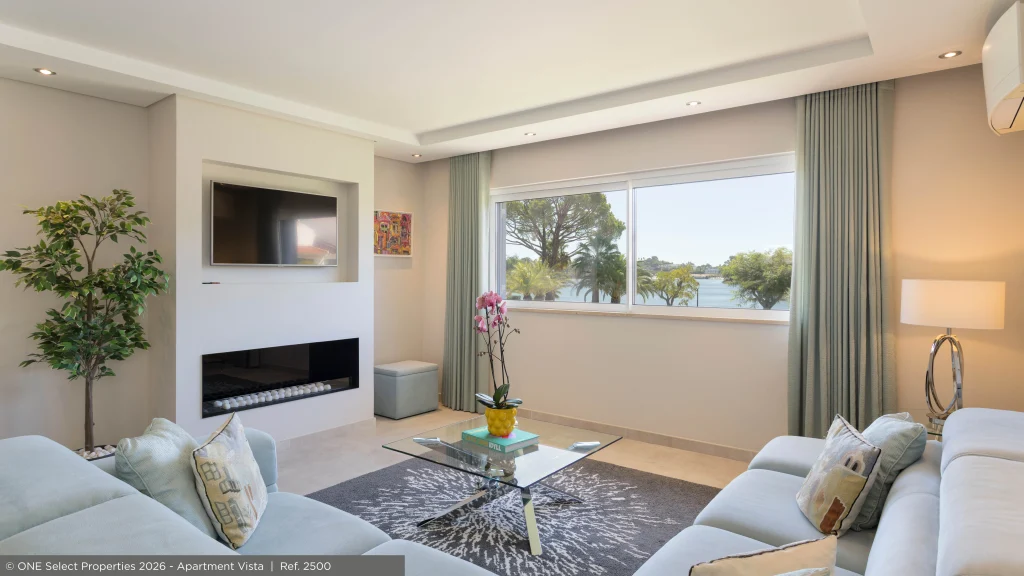
Few examples illustrate this better than two properties in Lakeside Village in Quinta do Lago. Townhouse Mila was built in 1990. Apartment Vista followed in 1991. They belong to essentially the same generation of Algarve resort development. Today, they feel quite different.
Mila retains more of the character of an established home. Natural stone, a wood-burning fireplace and its existing architectural language remain part of the experience, accompanied by practical updates and partial refurbishment.
Vista demonstrates another possibility. Its comprehensive renovation has introduced a noticeably more contemporary interior, including a modern kitchen, updated finishes and underfloor heating, while retaining the benefits of its established Lakeside Village location, southerly orientation and open views.
The interesting point is not which one has been renovated “better”. It is that the two properties answer the same question differently.
For buyers asking is it better to buy a renovated property in the Algarve or renovate one yourself?, this is where personal appetite matters just as much as design.
Buying a completed renovation allows you to judge the finished result. You can see the materials, understand the spaces and begin using the property immediately.
Taking on the renovation yourself offers greater control over the outcome, but also means accepting the decisions, time, professional coordination and uncertainty that come with a project. For an overseas second-home owner, that distinction can matter enormously. The question is not simply could I improve this property? It is do I actually want improving it to become part of owning it?
What Happens to a Contemporary Villa After Ten Years?
Contemporary properties deserve another consideration that is often overlooked. They age too. That may sound obvious, but new architecture is usually marketed at the exact moment when everything is at its most pristine: newly finished landscaping, untouched surfaces, perfectly staged interiors.
Yet houses are not meant to remain frozen in that moment. Gardens establish themselves. Materials soften. Owners make adjustments. The building begins to belong to its surroundings. For the right property, this can be an advantage rather than a decline.
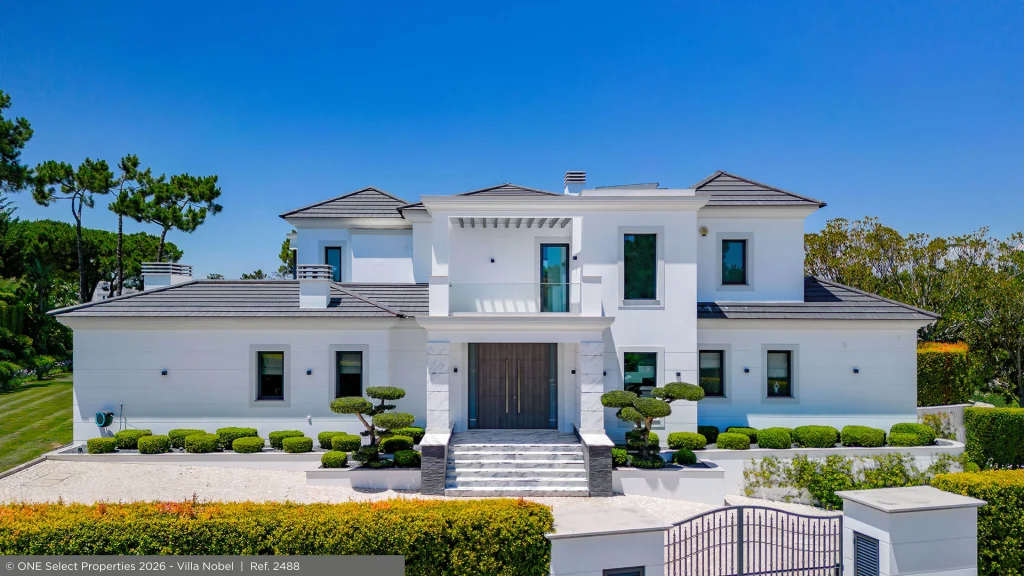
Villa Nobel in Quinta do Lago offers a useful counterpoint to a newly completed contemporary villa. Built in 2012 and subsequently renovated, it retains a distinctly contemporary way of living, with generous, light-filled interiors and a strong relationship between the house and its golf-front setting, but it is no longer a brand-new architectural object.
It has had time to settle. This makes new-build versus established contemporary property in the Algarve a more interesting comparison than it first appears.
A new build can offer the latest specification, the satisfaction of being its first owner and an architectural concept realised without the limitations of an existing building.
An established contemporary home lets you see something a new one cannot yet show you. How has the garden developed? How private does the property really feel? How have the materials aged? Does the architecture still look convincing once the initial newness has disappeared?
There is reassurance in a house that has already lived through several Algarve summers and still feels relevant.
The Details Worth Being Difficult About
When comparing traditional, renovated and contemporary Algarve homes, there are certain characteristics worth examining regardless of architectural style.
Natural light is one. Not simply whether a room is bright during a viewing, but where light enters and how that changes throughout the day.
Privacy is another. A photograph can suggest seclusion while carefully excluding a neighbouring terrace just outside the frame.
Then there is the relationship between inside and outside. In the Algarve, this is not a decorative consideration. A terrace that works naturally with the kitchen and living space can change how a home is used for much of the year. So can shade, wind protection, orientation and the ability to move easily between different outdoor areas as conditions change.
Room proportions matter too. So does circulation.
Where do guests go when they arrive? Can someone read quietly while other people are using the main living area? Does the principal bedroom feel genuinely separate? Is there somewhere practical for golf clubs, beach bags, luggage or the less photogenic parts of owning a holiday home? These details rarely make the headline description. They often determine whether the house is enjoyable to own.
Try the Empty-House Test
There is a useful mental exercise when viewing any property. Remove everything. Not literally, of course. But ignore the furniture, artwork, rugs, decorative lighting and carefully placed objects for a moment.
Forget the kitchen cabinet colour. Forget whether the sofa is to your taste. What remains?
Do you still like the proportions of the living room? Does the view still hold your attention? Would the terrace still be where you wanted to spend the afternoon? Does the house receive light where you want it? Does the relationship between rooms make sense? Would you still choose that plot?
This is particularly valuable when asking what should I look for when choosing a luxury home in the Algarve?
Interior design can make a mediocre space more persuasive. It can also make an excellent property harder to recognise when the owner’s taste happens to be very different from your own. The empty-house test brings the decision back to the property itself.
So, Traditional or Contemporary?
There is no answer that applies to every buyer. Nor should there be.
Villa Hillside demonstrates how an established home can retain architectural character while adapting to contemporary expectations.
Villa Mirabillis shows what becomes possible when modern living is considered from the outset.
Villa Nobel illustrates a different point in the life of contemporary architecture, once a home and its setting have had time to mature.
Townhouse Mila shows the value of restraint and of recognising when an existing property already possesses qualities worth preserving.
Apartment Vista demonstrates how comprehensively an older home can be reinterpreted when the location and fundamentals are right.
Together, they make the labels feel less definitive. A buyer who says they want “traditional” may actually be looking for warmth, texture, individuality and mature surroundings.
Someone asking for “contemporary” may really mean light, clean spatial planning, low-friction living and a close relationship with the outdoors.
Someone searching only for a fully renovated property may ultimately discover that they are willing to change considerably more than expected for the right plot, position or architecture. That is why the best brief is not necessarily a list of styles. It is a hierarchy of qualities.
The right Algarve home may have an old soul, a completely modern one, or something much more interesting in between.
For buyers considering property in Quinta do Lago, the Golden Triangle or the wider Central Algarve, ONE Select Properties can help refine that brief, compare different types of home and identify the properties whose qualities best match the way you intend to use them.